The Failure Schema: When You're Convinced You Will Never Measure Up
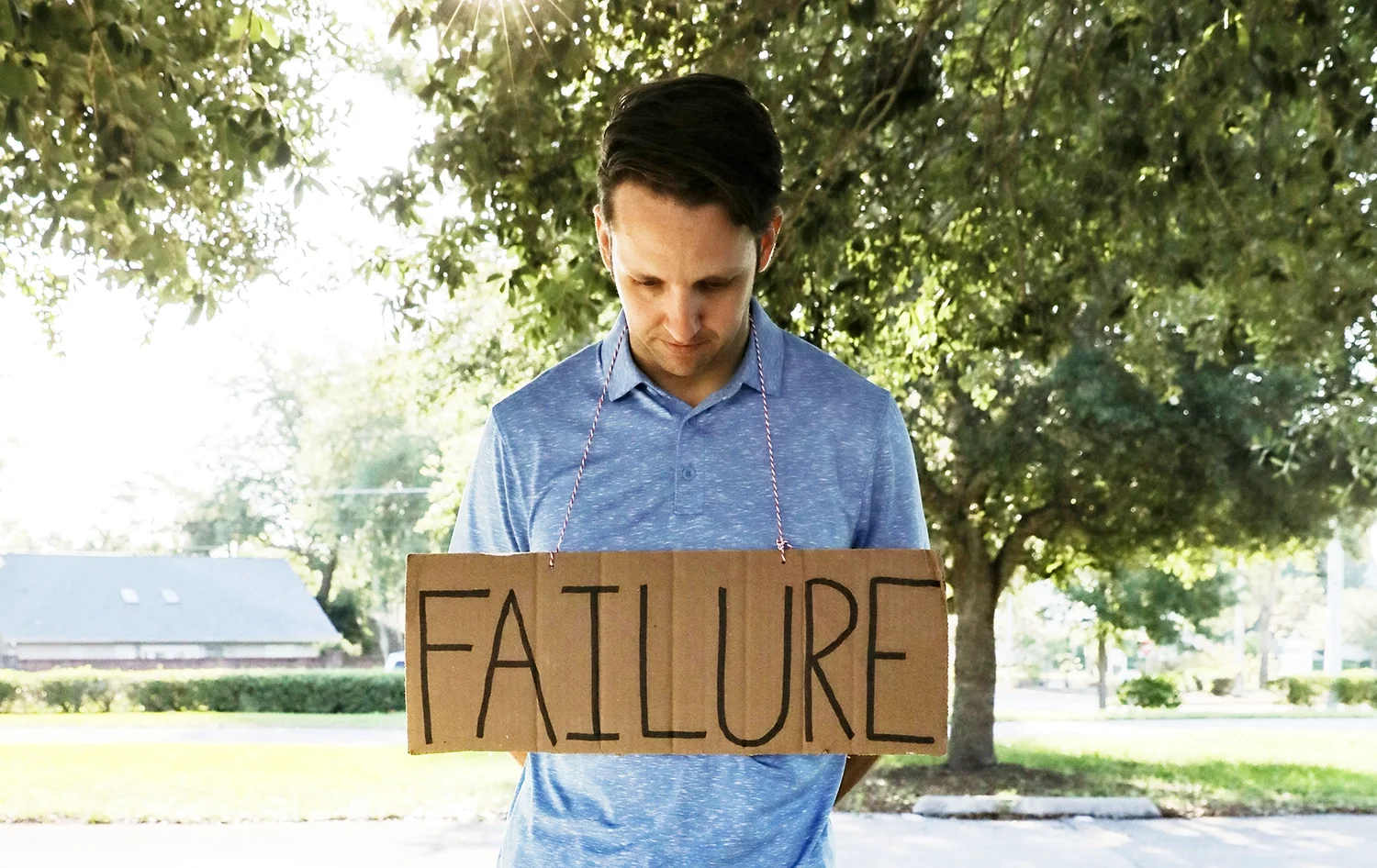
At its core, this failure schema says: I am a failure — I don't have what it takes, and sooner or later that will become obvious to everyone.
What Is the Failure Schema?
The Failure schema is built around a deeply held belief that you have failed, are currently failing, or will inevitably fail in areas of life that feel important, particularly achievement, career, and competence. It's not simply a lack of confidence in a specific area. It's a pervasive sense that you are fundamentally less capable, less intelligent, or less talented than the people around you, and that any success you have achieved is either accidental, temporary, or somehow doesn't really count.
This schema often operates quietly in the background, a persistent inner critic that dismisses accomplishments, magnifies mistakes, and finds ways to confirm that the person is, at their core, destined to fall short.
At its core, this schema says: I am a failure — I don't have what it takes, and sooner or later that will become obvious to everyone.
People With This Schema May…
Dismiss or minimise their own achievements, attributing success to luck or the efforts of others
Feel like an impostor in professional or academic settings, waiting to be exposed
Compare themselves unfavourably to peers, colleagues, or siblings — almost always coming up short in their own assessment
Procrastinate significantly, finding it hard to start tasks because starting means risking failure
Give up on challenges early, before the feared failure can be confirmed
Feel a disproportionate amount of shame in response to ordinary mistakes or setbacks
Struggle to take pride in what they have accomplished, even when others clearly recognise their ability
Feel anxious in performance situations, presentations, exams, evaluations, in ways that can interfere with actual performance
The Paradox of This Schema
The paradox of the Failure schema is that it often creates the very outcomes it predicts. Procrastination, avoidance, and giving up early all reduce the likelihood of success, and when things do go wrong, the schema is there to confirm what it always believed. Meanwhile, genuine successes are filtered out, explained away, or simply not registered. The schema is not a neutral observer, it is actively looking for evidence that confirms its conclusion, and actively discounting anything that challenges it.
Core Needs That Went Unmet
This schema typically develops in environments where a child received insufficient encouragement, faced harsh criticism for mistakes, or was compared unfavourably to others. Core needs that went unmet may include:
Recognition of effort and ability — having caregivers who genuinely noticed and affirmed what the child was good at
Permission to fail — an environment where mistakes were treated as a normal part of learning, not as evidence of fundamental inadequacy
Realistic and encouraging expectations — being held to standards that were achievable and supportive rather than harsh or dismissive
Comparison-free acceptance — being valued for who they were rather than measured against siblings, peers, or parental ideals
These needs may have gone unmet through overt criticism or put-downs, constant comparisons to more successful siblings or peers, caregivers who expressed disappointment in the child's abilities, or environments where achievement was highly valued but effort and progress were rarely acknowledged.
Typical Core Beliefs
"I'm not as capable as other people think I am."
"I've only gotten where I am through luck — it's only a matter of time before people find out."
"No matter how hard I try, I always fall short."
"Other people seem to find things easy that I find really hard."
"My successes don't really count — anyone could have done what I did."
"I'm just not smart enough / talented enough / good enough."
Schema Modes: Surrender, Avoidance & Overcompensation
Surrender — Going Along With the Schema
Surrender means accepting the belief of inevitable failure as true, giving up early, not putting in full effort to avoid the pain of trying and still failing, or gravitating toward roles and opportunities that feel safely below their actual capability.
Example: Despite being one of the more capable people in her department, Nadia has turned down two promotions in the past three years. She tells herself she's not ready, that others are better suited, that she'd rather stay where she knows what she's doing. The truth is that a bigger role means more visibility, and more visibility means more opportunities to be found out. Staying small feels like the only safe option.
Avoidance — Staying Away From the Trigger
Avoidance means steering clear of any situation where performance will be evaluated, declining opportunities, avoiding challenges, or procrastinating so extensively that the task never quite gets started and therefore never quite fails.
Example: Ryan has been meaning to apply for a graduate programme for two years. He researches it regularly, drafts opening paragraphs, and tells himself he'll submit when the application is a bit stronger. But the application is never quite strong enough, and the deadline passes again. Not applying hurts less than applying and being rejected — at least this way, he never has to find out for certain.
Overcompensation — Fighting Against the Schema
Overcompensation can show up as relentless overachievement — working harder than anyone else, perfectionism, an inability to rest, or a driven quality that looks like ambition from the outside but is really an exhausting attempt to outrun the fear of failure. The achievement never quite quiets the inner critic for long.
Example: By any external measure, Patrick is extraordinarily successful. He works 60-hour weeks, has never missed a deadline, and is known for the quality of everything he produces. But he feels no real satisfaction in any of it — each achievement is immediately replaced by anxiety about the next one. He is not working toward something. He is running away from something. And it is always just behind him.
Working Through the Failure Schema: How Therapy Can Help
Schema therapy is a structured, evidence-based approach developed by Dr Jeffrey Young that integrates cognitive-behavioural therapy with attachment theory, experiential techniques, and an understanding of early unmet needs. Rather than focusing solely on managing symptoms, schema therapy works at a deeper level — exploring where painful patterns began, and what the younger, more vulnerable part of you needed but didn't receive.
Therapy can be a meaningful space for beginning to explore the Failure schema. With support, people can start to examine the origins of their inner critic, develop curiosity about the gap between how they see themselves and how others experience them, and begin to build a more balanced and compassionate relationship with their own achievements and limitations. For many people, learning to receive recognition — really take it in, rather than deflect it — becomes an important and surprisingly moving part of the work.
For individuals, Online Schema Therapy | Kylie Walls Psychology offers a compassionate space to explore your schemas and begin to understand the patterns that have shaped your relationships.
If relationship dynamics are at the centre of your experience, Schema Therapy for Couples | Kylie Walls Psychology can support both partners in understanding how their schemas interact — and in finding a way to relate to each other with greater awareness and care.
References
Young, J. E., Klosko, J. S., & Weishaar, M. E. (2003). Schema therapy: A practitioner's guide. Guilford Press.
Young, J. E., & Klosko, J. S. (1994). Reinventing your life: The breakthrough program to end negative behaviour and feel great again. Plume.
Disclaimer: Any stories or examples provided are an example only and do not describe a specific client, person or event. Some of the information we provide on our website may be information related to health and medical issues, but it's not meant to be health and medical "advice". We provide this information for your general use only. While we try to provide accurate information, it may be historical, incomplete information or based on opinions that aren't widely held. Your personal situation has not been considered when providing the information, so any reliance on this information is at your sole risk. We recommend seeking independent professional advice before relying on the information we provide. Find the full terms of service here: Terms of Service | Kylie Walls Psychology