
Schema Therapy for Couples
Schema Therapy for Couples helps partners understand long-standing emotional patterns that can keep relationships feeling stuck. It looks beneath recurring conflicts or disconnection to make sense of where these patterns come from. Therapy focuses on building safer, more compassionate ways of relating that support lasting change.
What is Schema Therapy for Couples
Schema Therapy for Couples is an evidence-based approach that helps partners uncover the deeper patterns that sit beneath ongoing conflict, emotional distance, or repeated relationship cycles. Rather than focusing only on surface behaviours or communication strategies, it works at the root—addressing unmet emotional needs and long-standing patterns that can leave couples feeling stuck or disconnected.
Many couples seek Schema Therapy after trying approaches such as communication skills training or solution-focused therapy. While these can be helpful, some couples notice the same patterns continue to resurface, particularly during stress or emotional vulnerability, and are looking for deeper, more lasting change..

Schema Therapy for couples may be a good fit if you:
Often feel disconnected, hurt, or disappointed in your relationship, but struggle to understand why the same issues keep arising.
Notice strong emotional reactions between you and your partner that feel out of proportion or hard to explain afterwards.
Understand, logically, that certain relationship patterns aren’t helpful, yet find them difficult to shift despite repeated efforts.
Feel caught between trying to be “good enough” for your partner and still carrying a sense of disappointment, criticism, or inadequacy within the relationship.
Experience patterns where one or both partners over-accommodate, withdraw, pursue, or keep emotional distance, leading to ongoing tension or misunderstanding.
Recognise that earlier life experiences or past relational wounds may be influencing how you relate to one another now.
Want to better understand each other, strengthen emotional safety, and build a more secure and connected relationship together.
More Information About Schema Therapy for Couples
-
Schema Therapy for Couples is an integrative, evidence-based approach designed to uncover and address long-standing patterns — known as schemas — that can shape how we see ourselves, our partners, and our relationships. These patterns often originate in early life and influence the way we think, feel, and behave as adults. When left unaddressed, they can keep couples locked in cycles of conflict, disconnection, or misunderstanding.
Through Schema Therapy, couples learn to:
Identify and understand the core beliefs and emotional triggers that drive unhelpful patterns.
Recognise how each partner’s schemas and coping styles may interact in ways that fuel tension or distance.
Replace these patterns with healthier ways of relating that support emotional safety, trust, and intimacy.
-
Schema Therapy combines individual insight with joint exploration. Partners work together — and at times individually — to gain clarity about their schemas and how these show up in the relationship. Therapy typically involves:
Assessment and understanding of each partner’s schemas and coping modes
Mapping out the “mode cycles” that keep you stuck
Practicing new skills for emotional connection and communication
Using powerful techniques such as imagery, chair work, and empathic dialogue to promote healing
A key focus is on fostering empathy — for yourself and for your partner — as you both begin to see the emotional origins of each other’s reactions and needs.
-
Schema Couples Therapy can help when long-standing patterns leave couples feeling stuck, disconnected, or misunderstood. It’s particularly useful for addressing deeper issues such as:
Repeating cycles of conflict that seem hard to break
Trust issues, emotional distance, or struggles with intimacy
Difficulty expressing needs or managing strong emotions
Patterns where one partner withdraws, overcompensates, or feels overwhelmed
Old wounds or beliefs from the past that affect how partners see themselves and each other
By working at the root of these challenges, Schema Therapy helps couples create more understanding, balance, and emotional connection.
-
Schema Couples Therapy combines cognitive, experiential, and behavioural strategies to support lasting change. Some typical tools and techniques used include:
Cognitive strategies – These help partners identify unhelpful beliefs and thought patterns (schemas) that contribute to conflict or disconnection.
Mode and schema mapping – Partners gain clarity about their own coping styles and emotional triggers, and how these interact in the relationship.
Chair dialogues (or chair work) – This experiential tool gives voice to different parts (or modes) of each partner’s inner world, helping to resolve inner conflicts and build empathy between partners.
Guided imagery – Used to explore and heal early experiences that may still impact the relationship today.
Empathic confrontation – The therapist supports both partners in recognising unhelpful patterns.
-
The word schema comes from the Greek word for “form” or “pattern.” In psychology, schemas are deep mental structures or templates that guide how we interpret the world, ourselves, and others. They are formed early in life—often in childhood or adolescence—and are shaped by our experiences, particularly those involving our emotional needs.
Some schemas are helpful, but when certain needs go unmet (like the need for safety, connection, autonomy, or being valued), we can develop maladaptive schemas that continue into adulthood. These might lead us to believe, for example, that we are unlovable, defective, or that our needs will never be met. -
While schemas are the underlying beliefs or themes, modes refer to the emotional and behavioural “states” we shift into in the moment—especially when our schemas are triggered. For example, you might find yourself shutting down in conflict (Detached Protector mode), reacting with intense emotion (Vulnerable Child mode), or becoming overly critical of yourself (Punitive Parent mode).
Understanding your modes can be deeply empowering. It allows you to pause, recognise what’s happening beneath the surface, and begin to respond in new, healthier ways. -
Schema Therapy is typically considered a longer-term therapy because it involves working through a number of schemas and modes and understanding how they show up across different areas of life. This takes time, care, and often occurs in layers.
That said, many people do start to notice meaningful changes within the first 3–4 sessions, such as clearer insight, feeling less alone in their patterns, and gaining tools to manage triggers.Many people begin to notice helpful changes within the first few sessions, such as greater clarity about what is happening for them, feeling less alone with long-standing patterns, and learning practical ways to manage emotional triggers. Deeper change—such as building a stronger sense of stability, healing past emotional wounds, and developing new ways of relating to oneself and others—tends to take more time and ongoing commitment.
If you are seeking deeper, lasting change, I encourage you to view therapy as a long-term investment in your wellbeing. But this doesn’t mean you have to attend forever. Even short-term Schema Therapy can provide valuable insight and direction.
Life circumstances can sometimes bring new layers to the surface—especially during stress, transition, or new relationships. The good news is, once you understand your schemas and modes, you’ll be better equipped to handle these moments with awareness and self-compassion. -
For those seeking therapy that honours their spiritual beliefs, Schema Therapy offers a framework that can integrate well with values reflected in many religious faiths, including Christian values. At its heart, Schema Therapy aims to strengthen the “Healthy Adult”—a mature, grounded, and compassionate self, capable of care, service, courage, and wise decision-making. This aligns with many spiritual principles, such as growth in character, truthfulness, and the call to love both self and others well.
Schema therapy doesn’t introduce new beliefs or impose ideas that contradict a person’s faith. Rather, it brings to the surface patterns and beliefs that are already present—often shaped by early life experiences, emotional memory, or repeated relational dynamics.
These beliefs often live in what’s called implicit memory—they may not be part of your conscious thoughts, but they influence how you feel, relate, and respond. Schema therapy helps make these patterns more conscious so they can be gently examined in light of your values, goals, and spiritual beliefs.
The aim is not to undermine your faith, but to offer a space where internal beliefs can be explored and, if needed, reshaped—especially if they are rooted in fear, unmet needs, or early pain.✦ Example:
A person may genuinely believe that compassion and care for others are central to their faith. They may also value selflessness and service. However, through earlier experiences—perhaps in family, school, or church—they may have developed a schema like Self-Sacrifice or Subjugation, where they feel responsible for others’ emotions or needs to the point of burnout and resentment which is impacting on your life and relationships.
Some aspects of this schema may reflect values they want to hold onto, like kindness or responsibility. But other aspects—such as the belief that their own needs don’t matter or that setting boundaries is selfish—are not serving them well, especially if they lead to exhaustion, resentment, or a loss of joy in relationships.
Schema therapy supports the person in untangling what aligns with their faith and values, and what might be an internalised burden that no longer fits. It allows space to keep what is life-giving and release what is harmful. -
Clients often find schema therapy to be more emotionally engaging than other forms of therapy. Alongside conversation, it may include gentle experiential techniques such as guided imagery to revisit and reshape difficult memories in a safe way, or structured exercises such as chair work, that help different thoughts and feelings be expressed and understood. These approaches are used carefully and collaboratively to support healing of emotional wounds that may have been overlooked or silenced over time.
-
This process involves revisiting traumatic and painful memories in a safe way, that helps the individual to better understand was experienced and needed at the time—such as protection, nurturance, or validation. This doesn’t change the facts of what happened, and the person is fully present and conscious throughout the experience. However, imagery rescripting helps shift how traumatic and painful memories are stored and experienced emotionally. Many clients find this technique deeply healing, especially if they’ve experienced early trauma or emotional neglect.
-
Chair work allows clients to externalise and interacts with different parts of themselves—for example, the vulnerable or wounded part, the inner critic, or the part that avoids or detaches. By bringing these internal dynamics into the open, clients can gain new understanding and strengthen the healthy adult self. It can be emotional, confronting, and powerful—all within a safe and supportive environment.
These methods are used with care, pacing, and consent. Clients are never pushed to do anything before they feel ready. -
Schema therapy is my primary approach, as it provides a strong framework for understanding long-standing emotional and relational patterns. However, as I have training in a range of modalities as a psychologist, therapy is tailored to each individual or couple, and at times I integrate other evidence-based approaches when this is likely to be helpful.
For example, for some clients EMDR (Eye Movement Desensitisation and Reprocessing) may be offered to support trauma processing where appropriate. For couples, elements of the Gottman Method and Emotionally Focused Therapy (EFT) may be incorporated to support communication, emotional connection, and relationship repair. For concerns such as OCD, phobias, or social anxiety, Exposure and Response Prevention (ERP) may be used alongside schema work to address avoidance and anxiety-driven patterns.
Any integration is done thoughtfully and collaboratively, with schema therapy remaining the guiding framework.
Understanding Schema Clashes in Schema Therapy for Couples
Schemas are deeply held emotional expectations about ourselves, others, and relationships. They often develop early in life in response to repeated experiences—such as inconsistency, neglect, criticism, or harm. While schemas are formed as ways of coping or staying safe, they can become activated in adult relationships, especially during stress, conflict, or emotional closeness.
In couples, difficulties often arise not because partners are incompatible, but because one person’s schema unintentionally activates the other’s. Each partner reacts in ways that make sense given their history, yet the interaction can create a cycle that feels painful and hard to escape.
Schema Therapy for Couples helps partners understand these cycles, see each other more clearly, and respond in ways that meet underlying emotional needs rather than reinforcing old patterns.
The following are some examples of schema clashes that can present in couples therapy:
EMOTIONAL INHIBITION ↔ EMOTIONAL DEPRIVATION
A partner with Emotional Inhibition often learned early in life that showing feelings was unsafe, discouraged, or placed a burden on others. They may have grown up in environments where emotions were minimised, criticised, ignored, or met with discomfort. As a result, they learned to manage distress by staying controlled, rational, or self-contained. In adult relationships, this can show up as difficulty expressing feelings, discomfort with emotional intensity, or a tendency to shut down when conversations become vulnerable or emotionally charged.
Their partner may carry an Emotional Deprivation schema, shaped by repeated experiences of not receiving enough emotional attunement, comfort, or responsiveness from important others. This partner often longs for warmth, closeness, reassurance, and emotional presence, and may be especially sensitive to signs of distance or emotional unavailability. Even when care is shown in practical ways, the absence of emotional connection can feel deeply painful.
When these schemas interact, a painful cycle can develop. The more the emotionally inhibited partner limits expression or withdraws during emotional moments, the more deprived and unseen the other partner feels, leading them to reach out more strongly for connection. This increased emotional intensity can feel overwhelming or unsafe to the emotionally inhibited partner, reinforcing their instinct to pull back further.
ABANDONMENT ↔ MISTRUST/ABUSE
A partner with an Abandonment schema has often experienced instability, loss, or unpredictability in close relationships. As a result, they are highly attuned to signs of distance, withdrawal, or change. Even small shifts can trigger fears of being left, replaced, or forgotten.
The other partner may carry a Mistrust / Abuse schema, shaped by experiences of being hurt, controlled, criticised, or emotionally unsafe with others. This partner may expect that closeness will eventually lead to harm, and may protect themselves by staying guarded, sceptical, or emotionally defended.
When these schemas interact, the abandonment fears in one partner can lead to reassurance-seeking, heightened emotional responses, or checking behaviours. This intensity can feel threatening to the partner with mistrust, reinforcing their belief that closeness is unsafe and leading them to pull back or put up defences. That withdrawal, in turn, confirms the abandonment fears of the first partner—strengthening the cycle.
Schema Therapy helps couples slow this process down, understand the fears driving each reaction, and develop safer ways of seeking and offering closeness.
ENTITLEMENT ↔ SUJUGATION / SELF-SACRIFICE (with Defectiveness / Shame or Failure)
A partner with an Entitlement schema may have learned early that their needs had to be asserted strongly in order to be met, or that limits were inconsistently applied. In some cases, emotional care was available only when demands were made, leading to a belief that one’s needs should take priority. As an adult, this partner may struggle with frustration, expect accommodation from others, or feel uncomfortable when faced with boundaries. These behaviours are often driven by unmet emotional needs rather than intentional selfishness.
The other partner may carry a Subjugation or Self-Sacrifice schema, often alongside Defectiveness / Shame or Failure. This partner may have learned that expressing needs led to criticism, conflict, or emotional withdrawal, and that staying connected required compliance, pleasing others, or staying “out of the way.” When defectiveness or failure schemas are present, the partner may also hold a deep belief that their needs are unreasonable, burdensome, or less important than others’.
When these schemas interact, an uneven and painful dynamic can develop. The entitled partner may increasingly expect accommodation, while the self-sacrificing partner quietly gives in, suppresses needs, or over-functions to avoid conflict. Over time, the partner with subjugation and shame may feel invisible, depleted, or resentful, yet struggle to speak up due to fears of rejection or being “too much.” Meanwhile, the entitled partner may feel confused by emotional distance or sudden withdrawal, unaware of the internal cost being carried by their partner.
Schema Therapy helps couples make these hidden dynamics visible, strengthen boundaries, and support both partners to express needs safely—without dominance on one side or self-erasure on the other.
UNRELENTING STANDARDS ↔ FAILURE (with Defectiveness / Shame)
A partner with an Unrelenting Standards schema often learned early that approval, safety, or belonging depended on achievement, responsibility, or consistently “getting things right.” This may have developed in environments where mistakes were criticised, expectations were high, or emotional needs were secondary to performance. As an adult, this partner may push themselves—and sometimes the relationship—toward constant improvement, feeling a strong internal pressure to meet high standards. They may struggle to rest, tolerate imperfection, or accept situations as “good enough,” even when there is no external demand.
Their partner may carry a Failure schema, often alongside Defectiveness / Shame, shaped by repeated experiences of feeling unsuccessful, compared unfavourably to others, or viewed as not capable enough. This partner may hold a deep belief that they will never measure up, and that their efforts will ultimately fall short. When defectiveness or shame is also present, these fears extend beyond performance to a sense of being fundamentally flawed or inadequate as a person.
When these schemas interact, a painful cycle can develop. The high expectations or problem-focused stance of one partner—often driven by anxiety or a desire for things to go well—can unintentionally activate deep fears of failure and shame in the other. Even well-intended suggestions may be experienced as confirmation of not being good enough. In response, the partner with failure and shame may withdraw, avoid tasks or discussions, or become defensive. This can leave the partner with unrelenting standards feeling frustrated, burdened by responsibility, or compelled to push harder, further reinforcing the cycle. Over time, both partners may feel unseen: one carrying pressure and responsibility, the other weighed down by inadequacy and self-doubt.
Schema Therapy for Couples helps slow this pattern down, identify the vulnerabilities driving each reaction, and build ways of relating that allow for encouragement, acceptance, and shared responsibility—rather than pressure and shame.

Schema Therapy for couples helps you make sense of your feelings, reactions, and experiences, while developing a clearer understanding of how context has shaped them.

Is Schema Therapy for Couples a Good Fit for you?
Schema Therapy for Couples focuses on understanding the deeper emotional patterns that shape how partners relate to one another—particularly under stress or conflict. It works best when both partners are open to exploring not only what happens in the relationship, but why these patterns keep repeating.
The guide below can help you consider whether Schema Therapy for Couples is likely to be helpful at this stage.
Schema Therapy for Couples May Be a Good Fit If You:✔️ Both partners are willing to look at recurring relationship patterns, not just individual behaviours
✔️ You notice the same cycles of conflict, distance, or misunderstanding repeating over time
✔️ You are open to reflecting on how past experiences may influence present reactions
✔️ One or both partners feel emotionally triggered in ways that seem bigger than the situation itself
✔️ You want to understand each other’s emotional needs and vulnerabilities more deeply
✔️ You are willing to slow things down and respond differently when emotions run high
✔️ You are looking for change that feels deeper and more lasting than surface-level strategies
✔️ A breach of trust or affair has occurred, and both partners are willing to be honest, take responsibility, and work toward understanding and repair
Schema Therapy does not require you to agree on everything or to know exactly how to fix things—it asks for curiosity, honesty, and a willingness to engage in the process together.
Schema Therapy for Couples May Not Be the Right Fit Right Now If:✖️ There is ongoing domestic or family violence, coercive control, or fear within the relationship
✖️ One partner feels unsafe being emotionally open or honest in sessions
✖️ Therapy is being used to blame, pressure, or “fix” one partner
✖️ One or both partners are unwilling to reflect on their own patterns
✖️ There is active substance dependence or significant instability that is not being addressed
✖️ One partner has already emotionally disengaged and is unwilling to participate
✖️ An affair is ongoing, undisclosed, or minimised, or one partner is unwilling to be transparent or work towards accountability and change.
In these situations, individual therapy or additional support may be recommended first to ensure safety and stability.

Common Early Maladaptive Schemas
-

Disconnection & Rejection
Abandonment Schema
Fear that people will leave or can’t be trusted to stay emotionally present.
Mistrust/Abuse Schema
Expecting others to hurt, abuse, or take advantage of you.
Emotional Deprivation Schema
A sense that your emotional needs won’t be met by others.
Defectiveness/Shame Schema
Feeling flawed, not good enough, or unworthy of love.
Social Isolation/Alienation Schema
Feeling different from others or like you don’t belong.
-

Impaired Autonomy & Performance
Dependence/Incompetence Schema
Feeling incapable of handling daily responsibilities alone.
Vulnerability to Harm or Illness Schema
Fear that catastrophe (illness, accidents, etc.) is about to happen.
Enmeshment/Undeveloped Self Schema
Feeling too emotionally fused with others or unsure of who you are.
Failure Schema
Belief that you will fail or are fundamentally inadequate.
-

Over-vigilance & Inhibition
Negativity/Pessimism Schema
Focusing on the negative and expecting the worst.
Emotional Inhibition Schema
Suppressing emotions to avoid disapproval or upsetting others.
Unrelenting Standards/ Hypercriticalness Schema
Feeling you must meet high standards to avoid criticism.
Punitiveness Schema
Believing people should be harshly punished (including yourself) for mistakes.
-

Other-Directedness
Subjugation Schema
Surrendering control to others to avoid conflict or rejection.
Self-Sacrifice Schema
Putting others’ needs ahead of your own at your own expense.
Approval-Seeking/Recognition-Seeking Schema
Overly focused on gaining approval or status.
-

Impaired Limits
Entitlement/Grandiosity Schema
Believing you're special and don’t need to follow rules or consider others.
Insufficient Self-Control/Self-Discipline Schema
Difficulty tolerating frustration or delaying gratification.
Common Schema Therapy Modes (A Basic Overview)
In Schema Therapy, modes describe the emotional states or “parts of the self” that tend to show up in the moment — particularly under stress, in close relationships, or when old patterns are triggered. Most people move between different modes throughout the day, or in a short amount of time when they are exposed to a trigger (also known as mode cycles).
Rather than listing every possible mode, this overview offers a high-level snapshot of the main categories to help you recognise patterns that may feel familiar. In therapy, modes are often individualised in collaboration with clients, including using language or names that feel meaningful and relevant to their lived experience.
Why Understanding Modes Matters
Understanding modes helps explain why reactions can feel intense, sudden, or “out of character,” particularly in close relationships or high-stress situations. Rather than viewing these responses as personal failings, Schema Therapy understands them as meaningful patterns that once served a protective purpose.
Schema Therapy focuses on increasing awareness of modes, reducing the impact of unhelpful coping or critical states, and supporting the development of a strong, compassionate Healthy Adult.
Coping ModesCoping modes develop as ways of managing or avoiding emotional pain. They often emerge automatically and can be difficult to recognise in the moment. While these modes may have been adaptive at an earlier time, they can limit emotional closeness, flexibility, and wellbeing over time.
Detached Protector
Emotional withdrawal, numbing, distraction, or shutting down to avoid overwhelm or emotional pain. This mode can create distance in relationships and reduce access to feelings and needs.
Compliant Surrenderer
Giving in, people-pleasing, or prioritising others’ needs to avoid conflict, rejection, or disapproval. Over time, this can lead to resentment, exhaustion, or a loss of self.
Overcompensator
Attempts to counter vulnerability through control, perfectionism, dominance, achievement, or self-reliance. This mode often masks underlying fear, shame, or insecurity.
Critical and Demanding critic ModesThese modes reflect internalised rules, expectations, and judgments that developed in response to early experiences of pressure, criticism, or conditional acceptance. While they are often intended to prevent failure, rejection, or harm, they can become harsh, inflexible, and emotionally costly over time.
Punitive Critic
An inner voice that attacks, shames, or blames, often reinforcing feelings of worthlessness or failure.
Demanding Critic
Internal pressure to meet high standards, be productive, or “do better,” often at the expense of rest, emotional needs, or self-care.
Together, these modes can create an internal environment that feels relentless or unsafe. Schema Therapy focuses on helping people recognise when these critical states are active, understand where they came from, and gradually reduce their influence.
Forensic ModesForensic modes may emerge in situations involving threat, power, conflict, or survival. These are understood as situational states rather than fixed traits and can occur in people with no involvement in forensic or legal systems.
Bully and Attack
Responding to perceived threat or vulnerability with aggression, intimidation, or attempts to dominate in order to regain a sense of control.
Predator
Emotional detachment combined with goal-focused behaviour, where empathy is temporarily switched off to achieve an outcome or avoid perceived danger.
Conning and Manipulative
Using charm, deception, or manipulation to protect oneself, maintain control, or avoid consequences.
Paranoid or Suspicious Mode
Heightened mistrust, hypervigilance, or readiness to perceive threat, often shaped by past experiences of betrayal, danger, or injustice.
Schema Therapy approaches forensic modes with curiosity and containment, focusing on understanding what activates them and strengthening alternative, healthier responses.
Vulnerable ModesThese modes reflect emotional needs, reactions, and developmental responses.
Vulnerable Child
Feelings such as sadness, fear, shame, loneliness, or helplessness. This mode often emerges when a person feels criticised, rejected, unsafe, or emotionally exposed.
Angry or Distressed Child
Emotional responses such as anger, frustration, or distress when needs feel ignored, boundaries are crossed, or a person feels treated unfairly.
Entitled Child
A state where emotional needs feel urgent and non-negotiable, leading to strong expectations that others should meet those needs immediately. This mode often develops when limits were inconsistent, or when entitlement functioned as protection against deeper vulnerability or deprivation.
Healthy Adult ModeThe Healthy Adult mode represents emotional balance, insight, and psychological resilience. It is the part of the self that can hold difficult feelings, reflect rather than react, and respond in ways that are aligned with values and long-term wellbeing.
The Healthy Adult can:
recognise and soothe vulnerable parts
set boundaries with critical or coping modes
tolerate emotional discomfort without acting impulsively
balance needs, responsibilities, and self-care
respond to others with empathy, firmness, and flexibility
The Healthy Adult can hold complexity — acknowledging pain while also recognising strengths, limits, and context. It allows space for rest, self-care, and enjoyment, alongside commitment and responsibility.
A central aim of Schema Therapy is to strengthen and stabilise the Healthy Adult, so it becomes more accessible in everyday life and especially during moments of stress or relational difficulty.
Why Schema Therapy is my Primary Modality
Schema Therapy my primary therapeutic modality, which offers a well-researched, integrative framework that helps make sense of complex emotional and relational patterns shaped by early experiences, ongoing stress, and trauma. It provides both structure and flexibility, allowing therapy to be tailored to the individual while remaining grounded in evidence-based practice.
Why I find Schema Therapy so helpful
I find Schema Therapy particularly helpful because it offers a compassionate, structured way to understand why certain emotional patterns and relationship difficulties keep repeating, especially for people who have experienced long-standing stress, trauma, or complex relational histories. Rather than focusing only on symptoms, it works at a deeper level to help clients make sense of their experiences, build healthier coping patterns, and create meaningful, lasting change.
Who Schema Therapy can be helpful for
Schema Therapy can be especially beneficial for people who feel stuck in recurring patterns despite insight or previous therapy, including those experiencing chronic anxiety or low mood, relationship difficulties, effects of childhood or relational trauma, faith-related harm, or long-standing self-criticism and shame. It is also well suited to clients who want to understand themselves more deeply, strengthen emotional regulation, and develop healthier ways of relating to themselves and others over time.
Key Components of Schema Therapy
Identify Early Maladaptive Schemas & Modes
This involves identifying long-standing emotional patterns and moment-to-moment coping responses that shape how you experience yourself, others, and relationships, particularly under stress.
Engage in Experiential Techniques
Experiential techniques help access and work with emotions and memories linked to these patterns, supporting deeper change through approaches such as imagery and chair work rather than insight alone.
Reality Testing and Cognitive Restructuring
This step focuses on examining and gently challenging schema-driven beliefs, helping develop more balanced, compassionate, and realistic ways of understanding yourself and your experiences.
Limited Reparenting and Building Healthier Patterns
Through a supportive therapeutic relationship and practical strategies, unmet emotional needs are addressed while new, healthier ways of relating, coping, and setting boundaries are developed over time.
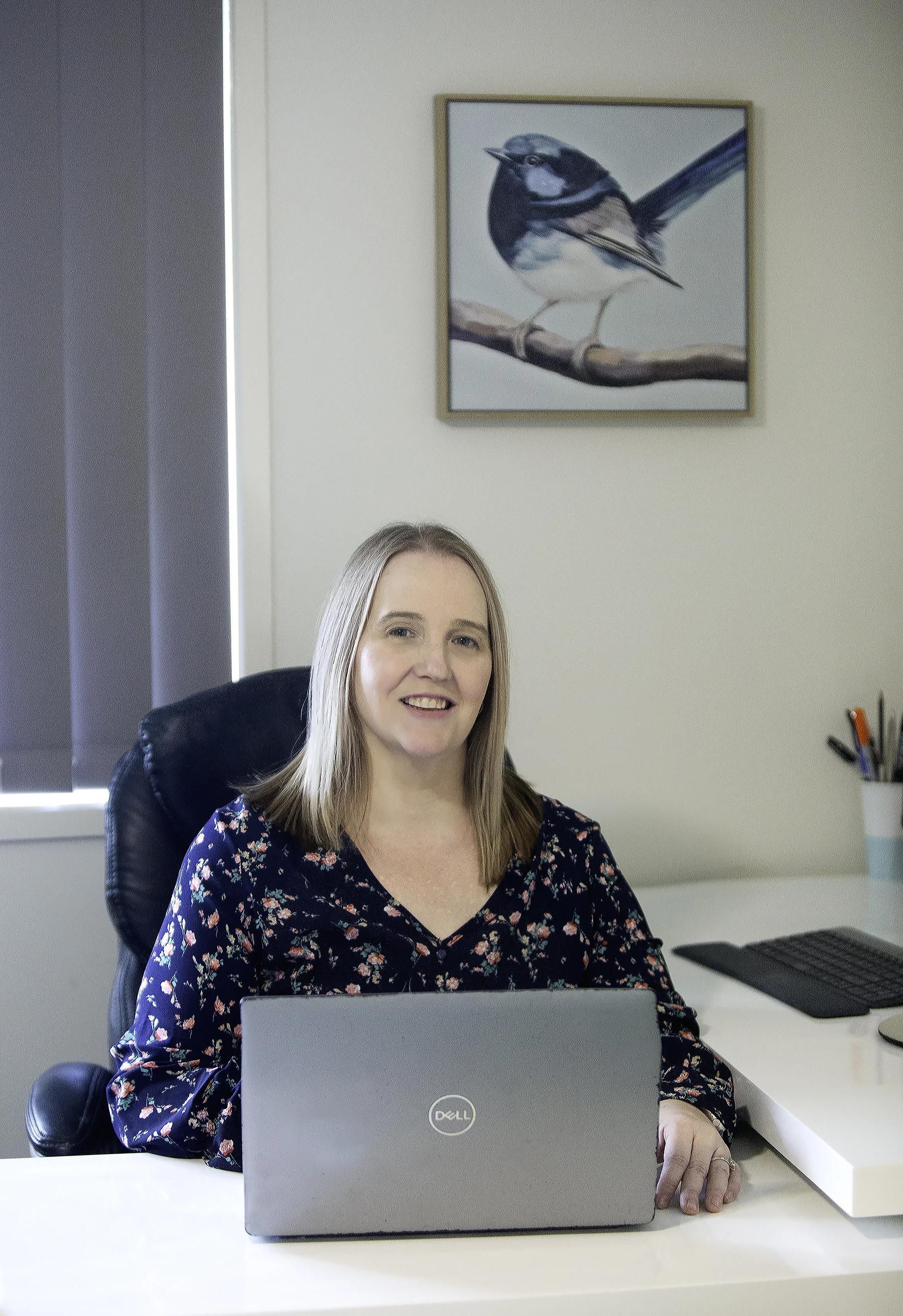
About KylieHi, I’m Kylie Walls, a registered psychologist
My work is shaped by professional training, research, and experience across education, community, and private practice settings. I work with adults and couples experiencing a range of concerns, including anxiety, depression, trauma, OCD, stress, burnout, relationship and communication difficulties, and challenges related to identity, belonging, and life transitions.
A central focus of my work is supporting individuals and couples who experience long-standing or recurring patterns that affect emotional wellbeing and relationships. These patterns may involve self-criticism, emotional withdrawal, people-pleasing, fear of abandonment, emotional reactivity, anxiety associated with the family system, or repeated relationship difficulties. I primarily use schema therapy, an evidence-based approach designed to help people understand where these patterns developed and how to change them in meaningful and lasting ways.
I also use a schema therapy for couples approach to work with couples to understand and change unhelpful relational patterns, strengthen emotional connection, and process and recover from infidelity in a structured and supportive therapeutic space.
My approach is compassionate, structured, and ethically grounded, with careful attention to both individual experience and the relational dynamics that shape behaviour, emotions, and connection. Schema Therapy includes experiential, relational, and cognitive strategies to support healthier ways of relating to yourself and to others.