
Mental Health Support therapy online from a psychologist

“Seeking support is an act of care — for your wellbeing, your relationships, and your future.”
Life can feel overwhelming, particularly when the same emotional struggles or relationship patterns keep repeating. Whether you’re experiencing anxiety, low mood, stress, grief, or navigating a significant life transition, Schema Therapy offers a structured and supportive space to pause, reflect, and understand what lies beneath these experiences. Ongoing difficulties don’t define you — they often reflect long-standing patterns shaped by earlier experiences and unmet emotional needs.
As a psychologist, I provide evidence-based and compassionate support and Schema Therapy to help you recognise these patterns, respond differently to emotional triggers, and develop healthier ways of relating to yourself and others. Together, we work toward greater emotional balance, resilience, and a renewed sense of confidence and hope.

It’s time for a changeLife can become overwhelming for many reasons—ongoing stress, anxiety, low mood, grief, trauma, or repeated patterns in relationships that feel hard to shift. These experiences can affect a person’s sense of self, confidence, and capacity to engage fully in everyday life. Schema-informed psychological support offers a steady and compassionate space to slow down, make sense of what has been happening, and understand the deeper patterns contributing to distress.
The focus is on developing insight into these patterns, strengthening emotional coping, and finding new ways to respond to challenges with greater flexibility and self-understanding. Over time, this work supports a renewed sense of clarity, resilience, and emotional wellbeing.
Mental Health Conditions that I treat:✾
Anxiety & Stress
Persistent worry, tension, rumination, or difficulty relaxing, particularly during times of change or uncertainty.
✾
Depression & Low Mood
Feelings of sadness, flatness, loss of motivation, or difficulty experiencing enjoyment or energy.
✾
Burnout & Exhaustion
Emotional, physical, and mental fatigue linked to sustained stress, caregiving, ministry, work, or high responsibility roles.
✾
Grief & Loss
Adjusting to significant change or bereavement, including ambiguous grief, loss of identity, or life transitions.
✾
Scrupulosity /Religious OCD / Moral OCD
Intense fear of doing the “wrong” thing morally or spiritually, accompanied by compulsive reassurance seeking, confession, or checking.
✾
Emotional Regulation Difficulties
Intense emotions that feel hard to manage, including overwhelm, shutdown, irritability, or emotional numbness.
✾
Trauma and Complex Trauma
Past experiences that continue to influence how a person feels, responds, and relates, including relational or developmental trauma.
✾
Relationship and Interpersonal Difficulties
Patterns of conflict, disconnection, miscommunication, people-pleasing, or feeling unseen or misunderstood in relationships.
✾
Faith and Spirituality-Related Concerns
Navigating questions of meaning, values, belonging, or experiences of harm within religious contexts (faith-sensitive approach).
✾
Obsessive–Compulsive Disorder (OCD)
Intrusive thoughts, uncertainty, and repetitive behaviours or mental rituals used to reduce distress.
✾
Self-Esteem and Identity Concerns
Challenges related to self-worth, confidence, internal criticism, or feeling “not enough.”
✾
Adjusting to Life Transitions
Changes in work, study, relationships, health, parenting, or stage of life.
Schema Therapy helps you make sense of your feelings, reactions, and experiences, while developing a clearer understanding of how context has shaped them.
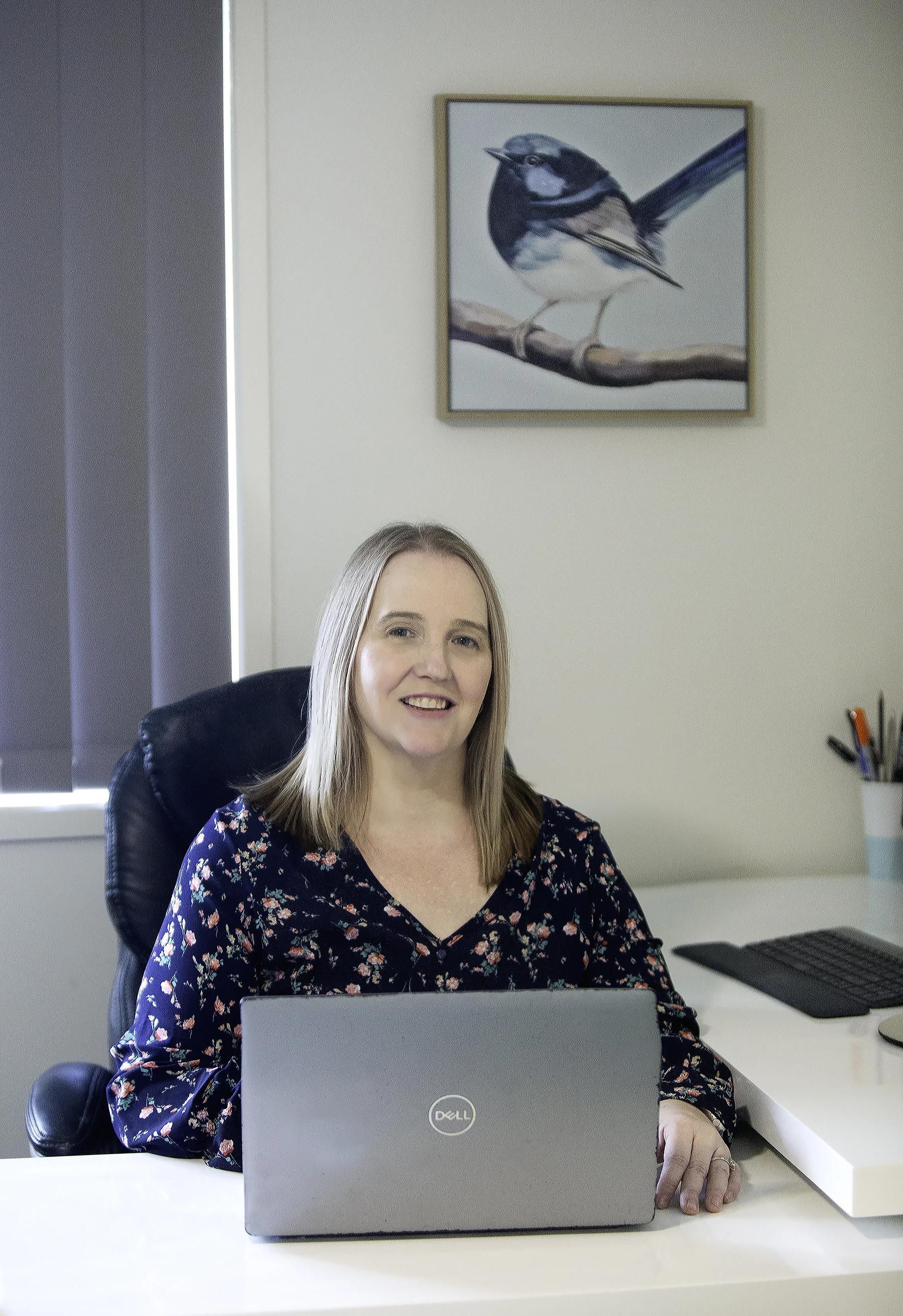
About KylieHi, I’m Kylie Walls, a registered psychologist
My work is shaped by professional training, research, and experience across education, community, and private practice settings. I work with adults and couples experiencing a range of concerns, including anxiety, depression, trauma, OCD, stress, burnout, relationship and communication difficulties, and challenges related to identity, belonging, and life transitions.
A central focus of my work is supporting individuals and couples who experience long-standing or recurring patterns that affect emotional wellbeing and relationships. These patterns may involve self-criticism, emotional withdrawal, people-pleasing, fear of abandonment, emotional reactivity, anxiety associated with the family system, or repeated relationship difficulties. I primarily use schema therapy, an evidence-based approach designed to help people understand where these patterns developed and how to change them in meaningful and lasting ways.
I also use a schema therapy for couples approach to work with couples to understand and change unhelpful relational patterns, strengthen emotional connection, and process and recover from infidelity in a structured and supportive therapeutic space.
My approach is compassionate, structured, and ethically grounded, with careful attention to both individual experience and the relational dynamics that shape behaviour, emotions, and connection. Schema Therapy includes experiential, relational, and cognitive strategies to support healthier ways of relating to yourself and to others.
Have questions about mental health support?

Q&A-
Yes. If you have a current Mental Health Treatment Plan from your GP, you may be eligible to receive a Medicare rebate for up to 10 individual psychology sessions per calendar year. These rebates help reduce the out-of-pocket cost for each session. You’ll need to provide a copy of your referral letter and MHTP prior to your first appointment.
-
Although there are some presentations that I cannot safely treat online, I work with individuals experiencing a range of mental health concerns, from mild anxiety or low mood through to more complex challenges such as PTSD, dissociation, religious trauma, and OCD. If your presentation is more complex, I will work collaboratively with your broader care team (e.g., psychiatrist, GP, or support worker) where appropriate, to ensure you receive safe and effective care.
Online therapy is offered as long as it is deemed clinically appropriate and safe for your specific needs. -
Yes. Research shows that online therapy can be just as effective as face-to-face sessions for a wide range of concerns, including depression, anxiety, trauma, and relationship issues. It also offers convenience, privacy, and access to support regardless of location. All sessions are conducted via a secure telehealth platform.
-
Everyone experiences sadness or low mood at times, especially during stressful or challenging seasons. Sometimes these feelings are part of an adjustment disorder with depressive features — a short-term reaction to significant life changes or stressors. In these cases, the symptoms may ease once the situation stabilises, but if low mood, fatigue, or loss of interest persist beyond a few weeks, it may be a sign of depression developing. Seeking support early can make a real difference, helping you process what’s happening, develop coping strategies, and prevent symptoms from deepening or becoming more entrenched over time. -
Yes. Depression is highly treatable. Psychological therapies such as Cognitive Behavioural Therapy (CBT), Schema Therapy, and Acceptance and Commitment Therapy (ACT) have been shown to help. Treatment may also include exploring lifestyle changes, medication (in consultation with your GP or psychiatrist), and strengthening social and emotional support.
Schema Therapy can be particularly helpful for individuals whose depression is linked to long-standing patterns of thinking and relating that have developed from earlier experiences. It helps uncover and address deeply held beliefs — or “schemas” — about oneself and the world, such as feelings of failure, unworthiness, or fear of rejection. By understanding how these patterns formed and how they influence current emotions and relationships, clients can begin to respond to life’s challenges with greater self-compassion, resilience, and flexibility. Over time, this process supports emotional healing and helps build a more stable and positive sense of self.
-
Yes. Conflict, emotional disconnection, or feeling unsupported can contribute to or worsen depression. Addressing these issues through therapies such as Emotionally Focused Therapy or the Gottman Method can improve communication, rebuild trust, and strengthen emotional connection. Schema Therapy can also help individuals understand underlying patterns or unmet emotional needs that may be affecting how they relate to others. Exploring these dynamics — whether individually or through couples counselling — can lead to healthier ways of connecting and resolving conflict. A psychologist can help identify these patterns, support each person in expressing their needs safely, and guide the process of restoring connection and mutual understanding.
Schema Therapy can be particularly helpful for individuals whose depression is linked to long-standing patterns of thinking and relating that have developed from earlier experiences. It helps uncover and address deeply held beliefs — or “schemas” — about oneself and the world, such as feelings of failure, unworthiness, or fear of rejection. By understanding how these patterns formed and how they influence current emotions and relationships, clients can begin to respond to life’s challenges with greater self-compassion, resilience, and flexibility. Over time, this process supports emotional healing and helps build a more stable and positive sense of self.
-
Many people find that their beliefs, identity, or past experiences — including within faith communities — shape how they understand and cope with depression. Therapy at Refuge Psychology provides space to explore these issues respectfully, integrating your values and worldview into the healing process if you choose.
Schema Therapy can be particularly helpful for individuals whose depression is linked to long-standing patterns of thinking and relating that have developed from earlier experiences. It helps uncover and address deeply held beliefs — or “schemas” — about oneself and the world, such as feelings of failure, unworthiness, or fear of rejection. By understanding how these patterns formed and how they influence current emotions and relationships, clients can begin to respond to life’s challenges with greater self-compassion, resilience, and flexibility. Over time, this process supports emotional healing and helps build a more stable and positive sense of self.
-
Many new parents feel low, tearful, or anxious after having a baby, but if these feelings last longer than a couple of weeks or start affecting your daily life, it could be a sign of postnatal depression. This is a common and treatable condition that can develop weeks or even months after birth, often linked to the emotional, physical, and hormonal changes of the perinatal period. You may notice feeling sad, detached from your baby, or struggling with sleep, appetite, or motivation. Seeking help early is important — with professional support, recovery is very possible, and you can regain a sense of connection, calm, and confidence in your role as a parent.
Schema Therapy can be particularly helpful for individuals whose depression is linked to long-standing patterns of thinking and relating that have developed from earlier experiences. It helps uncover and address deeply held beliefs — or “schemas” — about oneself and the world, such as feelings of failure, unworthiness, or fear of rejection. By understanding how these patterns formed and how they influence current emotions and relationships, clients can begin to respond to life’s challenges with greater self-compassion, resilience, and flexibility. Over time, this process supports emotional healing and helps build a more stable and positive sense of self.
-
It’s common for people of faith to question their spiritual strength when they experience depression, but depression is not a reflection of weak or inadequate faith. It’s a mental health condition that can affect anyone and is influenced by a mix of biological, emotional, and situational factors — not spiritual failure. Depression can make it harder to feel connected to hope or peace, even when your beliefs remain strong. Therapy can provide space to explore these struggles in a way that honours your faith, helping you rediscover meaning and compassion toward yourself while walking through a difficult season.
Schema Therapy can be particularly helpful for individuals whose depression is linked to long-standing patterns of thinking and relating that have developed from earlier experiences. It helps uncover and address deeply held beliefs — or “schemas” — about oneself and the world, such as feelings of failure, unworthiness, or fear of rejection. By understanding how these patterns formed and how they influence current emotions and relationships, clients can begin to respond to life’s challenges with greater self-compassion, resilience, and flexibility. Over time, this process supports emotional healing and helps build a more stable and positive sense of self.
-
PTSD often develops after a single traumatic event, such as a car accident or assault. Complex trauma develops after ongoing or repeated trauma, such as childhood abuse, domestic violence, or long-term neglect. Both involve the nervous system being overwhelmed, but complex trauma often affects identity, relationships, and emotional regulation more broadly. Therapy can address both by providing stabilisation, processing traumatic memories, and building healthier patterns of self-worth and connection.
Schema Therapy can be particularly helpful for individuals whose depression is linked to long-standing patterns of thinking and relating that have developed from earlier experiences. It helps uncover and address deeply held beliefs — or “schemas” — about oneself and the world, such as feelings of failure, unworthiness, or fear of rejection. By understanding how these patterns formed and how they influence current emotions and relationships, clients can begin to respond to life’s challenges with greater self-compassion, resilience, and flexibility. Over time, this process supports emotional healing and helps build a more stable and positive sense of self.
-
My primary approach to supporting people with PTSD and trauma is Schema Therapy. This therapy looks at the deep emotional patterns (schemas) that can develop after trauma and helps people understand, challenge, and heal them. Schema Therapy includes both practical strategies and some gentle processing of traumatic experiences, with the aim of integrating memories in a way that reduces their power and supports long-term recovery. This is primarily a talk therapy, similar to Cognitive Behavioural Therapy, with some experiential elements added to it.
I also offer EMDR (Eye Movement Desensitisation and Reprocessing) for clients who feel comfortable with this approach. EMDR is an evidence-based method that helps the brain reprocess traumatic memories through guided recall combined with bilateral stimulation (such as eye movements or tapping). Please know that EMDR is not my primary modality, and you will always have full choice in whether or not to engage with this therapy. Together, we can discuss which approach feels most appropriate and supportive for you.
Schema Therapy can be particularly helpful for individuals whose depression is linked to long-standing patterns of thinking and relating that have developed from earlier experiences. It helps uncover and address deeply held beliefs — or “schemas” — about oneself and the world, such as feelings of failure, unworthiness, or fear of rejection. By understanding how these patterns formed and how they influence current emotions and relationships, clients can begin to respond to life’s challenges with greater self-compassion, resilience, and flexibility. Over time, this process supports emotional healing and helps build a more stable and positive sense of self.
-
Yes. PTSD is highly treatable with the right support. Approaches such as Schema Therapy, EMDR, Cognitive Behavioural Therapy (CBT), and other trauma-informed methods have been shown to reduce symptoms and help survivors rebuild their lives. Therapy provides tools to manage flashbacks, calm the nervous system, challenge self-blame, and support recovery in relationships, work, and faith.
I also offer EMDR (Eye Movement Desensitisation and Reprocessing) for clients who feel comfortable with this approach. EMDR is an evidence-based method that helps the brain reprocess traumatic memories through guided recall combined with bilateral stimulation (such as eye movements or tapping). Please know that EMDR is not my primary modality, and you will always have full choice in whether or not to engage with this therapy. Together, we can discuss which approach feels most appropriate and supportive for you.
Schema Therapy can be particularly helpful for individuals whose depression is linked to long-standing patterns of thinking and relating that have developed from earlier experiences. It helps uncover and address deeply held beliefs — or “schemas” — about oneself and the world, such as feelings of failure, unworthiness, or fear of rejection. By understanding how these patterns formed and how they influence current emotions and relationships, clients can begin to respond to life’s challenges with greater self-compassion, resilience, and flexibility. Over time, this process supports emotional healing and helps build a more stable and positive sense of self.
-
That’s okay. Therapy for PTSD does not always mean recounting every detail of what happened, and if you do not feel comfortable with this, we will work on those elements of trauma recovery you feel most comfortable with, and take it at your pace. It may be helpful to know that avoidance of memories is one of the criteria of PTSD, so you are not alone in feeling this way. Approaches like EMDR and Schema Therapy allow the brain to process trauma without needing to re-live it in detail. Sessions focus on helping you feel safe, reducing symptoms, and building strategies for living well in the present.
I also offer EMDR (Eye Movement Desensitisation and Reprocessing) for clients who feel comfortable with this approach. EMDR is an evidence-based method that helps the brain reprocess traumatic memories through guided recall combined with bilateral stimulation (such as eye movements or tapping). Please know that EMDR is not my primary modality, and you will always have full choice in whether or not to engage with this therapy. Together, we can discuss which approach feels most appropriate and supportive for you.
Schema Therapy can be particularly helpful for individuals whose depression is linked to long-standing patterns of thinking and relating that have developed from earlier experiences. It helps uncover and address deeply held beliefs — or “schemas” — about oneself and the world, such as feelings of failure, unworthiness, or fear of rejection. By understanding how these patterns formed and how they influence current emotions and relationships, clients can begin to respond to life’s challenges with greater self-compassion, resilience, and flexibility. Over time, this process supports emotional healing and helps build a more stable and positive sense of self.
-
Yes. Trauma that occurs within a church or faith environment can be especially complex. Survivors often describe not only the emotional and psychological effects of trauma, but also deep confusion, grief, or spiritual distress. For some, teachings were used in harmful ways to excuse abuse or silence concerns, leaving lasting feelings of guilt, shame, or fear. Others struggle with loss of trust in their community, or even in God, which can feel disorienting and painful.
As a psychologist, I provide a safe space to process both the traumatic experiences themselves and the spiritual or faith-related struggles that may follow. Therapy can help you:
Understand how trauma in a faith setting has affected your sense of safety, belonging, and identity.
Untangle distorted or misused spiritual messages from what you personally value and believe.
Address common trauma symptoms such as anxiety, depression, nightmares, or hypervigilance.
Explore how to reconnect with faith, community, or spirituality in a way that feels safe — if that is something you want.
My role is not to give theological answers but to walk with you in processing both the psychological and spiritual impact of what you’ve been through. Many people find that by addressing the trauma and the confusion together, they can move toward healing, clarity, and a renewed sense of dignity and hope.
I also offer EMDR (Eye Movement Desensitisation and Reprocessing) for clients who feel comfortable with this approach. EMDR is an evidence-based method that helps the brain reprocess traumatic memories through guided recall combined with bilateral stimulation (such as eye movements or tapping). Please know that EMDR is not my primary modality, and you will always have full choice in whether or not to engage with this therapy. Together, we can discuss which approach feels most appropriate and supportive for you.
Schema Therapy can be particularly helpful for individuals whose depression is linked to long-standing patterns of thinking and relating that have developed from earlier experiences. It helps uncover and address deeply held beliefs — or “schemas” — about oneself and the world, such as feelings of failure, unworthiness, or fear of rejection. By understanding how these patterns formed and how they influence current emotions and relationships, clients can begin to respond to life’s challenges with greater self-compassion, resilience, and flexibility. Over time, this process supports emotional healing and helps build a more stable and positive sense of self.
-
Yes. Medical trauma can occur when healthcare experiences feel overwhelming, frightening, or unsafe — such as emergency procedures, invasive interventions, or feeling powerless or unheard in a medical setting. These experiences can leave lasting emotional and psychological effects, including anxiety, panic, flashbacks, nightmares, or fear of engaging with medical care in the future.
As a psychologist, I have a strong understanding of medical trauma and its impact. My primary approach is Schema Therapy, which helps explore how these experiences affect deep emotional patterns, and supports the integration of traumatic memories in a safe, structured way. For clients who feel comfortable, I also offer EMDR, an evidence-based therapy that helps the brain reprocess distressing memories so they feel less overwhelming.
Therapy can help reduce symptoms, rebuild trust, and support you in feeling safer and more confident when engaging with healthcare again. You will always have choice in the approach we take, and support will be tailored to your individual needs.
As a psychologist, I provide a safe space to process both the traumatic experiences themselves and the spiritual or faith-related struggles that may follow. Therapy can help you:
Understand how trauma in a faith setting has affected your sense of safety, belonging, and identity.
Untangle distorted or misused spiritual messages from what you personally value and believe.
Address common trauma symptoms such as anxiety, depression, nightmares, or hypervigilance.
Explore how to reconnect with faith, community, or spirituality in a way that feels safe — if that is something you want.
My role is not to give theological answers but to walk with you in processing both the psychological and spiritual impact of what you’ve been through. Many people find that by addressing the trauma and the confusion together, they can move toward healing, clarity, and a renewed sense of dignity and hope.
I also offer EMDR (Eye Movement Desensitisation and Reprocessing) for clients who feel comfortable with this approach. EMDR is an evidence-based method that helps the brain reprocess traumatic memories through guided recall combined with bilateral stimulation (such as eye movements or tapping). Please know that EMDR is not my primary modality, and you will always have full choice in whether or not to engage with this therapy. Together, we can discuss which approach feels most appropriate and supportive for you.
Schema Therapy can be particularly helpful for individuals whose depression is linked to long-standing patterns of thinking and relating that have developed from earlier experiences. It helps uncover and address deeply held beliefs — or “schemas” — about oneself and the world, such as feelings of failure, unworthiness, or fear of rejection. By understanding how these patterns formed and how they influence current emotions and relationships, clients can begin to respond to life’s challenges with greater self-compassion, resilience, and flexibility. Over time, this process supports emotional healing and helps build a more stable and positive sense of self.
-
Yes. Sexual assault is a traumatic experience that can leave lasting physical, emotional, and psychological impacts. Survivors often experience symptoms such as anxiety, depression, shame, hypervigilance, difficulty with trust or intimacy, and in some cases PTSD or complex trauma. It is common to feel conflicted emotions — fear, anger, numbness, or self-blame — even years after the event.
As a psychologist, I provide a safe and supportive space to process these experiences at your own pace. My primary approach is Schema Therapy, which helps address deep patterns of shame, mistrust, or vulnerability that trauma can reinforce. I also offer EMDR for those who feel comfortable with this method, as it can be highly effective in reprocessing traumatic memories. You will always have full choice in how we work together, and therapy is tailored to your needs and values.
As a psychologist, I have a strong understanding of medical trauma and its impact. My primary approach is Schema Therapy, which helps explore how these experiences affect deep emotional patterns, and supports the integration of traumatic memories in a safe, structured way. For clients who feel comfortable, I also offer EMDR, an evidence-based therapy that helps the brain reprocess distressing memories so they feel less overwhelming.
Therapy can help reduce symptoms, rebuild trust, and support you in feeling safer and more confident when engaging with healthcare again. You will always have choice in the approach we take, and support will be tailored to your individual needs.
As a psychologist, I provide a safe space to process both the traumatic experiences themselves and the spiritual or faith-related struggles that may follow. Therapy can help you:
Understand how trauma in a faith setting has affected your sense of safety, belonging, and identity.
Untangle distorted or misused spiritual messages from what you personally value and believe.
Address common trauma symptoms such as anxiety, depression, nightmares, or hypervigilance.
Explore how to reconnect with faith, community, or spirituality in a way that feels safe — if that is something you want.
My role is not to give theological answers but to walk with you in processing both the psychological and spiritual impact of what you’ve been through. Many people find that by addressing the trauma and the confusion together, they can move toward healing, clarity, and a renewed sense of dignity and hope.
I also offer EMDR (Eye Movement Desensitisation and Reprocessing) for clients who feel comfortable with this approach. EMDR is an evidence-based method that helps the brain reprocess traumatic memories through guided recall combined with bilateral stimulation (such as eye movements or tapping). Please know that EMDR is not my primary modality, and you will always have full choice in whether or not to engage with this therapy. Together, we can discuss which approach feels most appropriate and supportive for you.
Schema Therapy can be particularly helpful for individuals whose depression is linked to long-standing patterns of thinking and relating that have developed from earlier experiences. It helps uncover and address deeply held beliefs — or “schemas” — about oneself and the world, such as feelings of failure, unworthiness, or fear of rejection. By understanding how these patterns formed and how they influence current emotions and relationships, clients can begin to respond to life’s challenges with greater self-compassion, resilience, and flexibility. Over time, this process supports emotional healing and helps build a more stable and positive sense of self.
-
Yes. It’s common for trauma symptoms to appear months or even years after the event. At the time of the trauma, your mind and body may have gone into “survival mode,” allowing you to keep going day-to-day. Later, when life feels safer or there’s a reminder of what happened, memories can resurface and the nervous system may react as if the danger is happening again. This can lead to flashbacks, nightmares, panic attacks, or feeling constantly on edge.
Sometimes trauma experienced in childhood — including abuse, neglect, or growing up in a home affected by domestic violence — can emerge unexpectedly in adulthood. These memories may surface when triggered by life stress, parenthood, relationships, or even a sense of safety that allows your mind to start processing what was once too overwhelming.
Experiencing symptoms after a delay does not mean you are weak or “going backwards.” It means your body and mind are finally trying to process what happened. Therapy can help you make sense of these symptoms, calm the nervous system, and find ways to safely integrate traumatic memories so they no longer dominate your present.
As a psychologist, I provide a safe and supportive space to process these experiences at your own pace. My primary approach is Schema Therapy, which helps address deep patterns of shame, mistrust, or vulnerability that trauma can reinforce. I also offer EMDR for those who feel comfortable with this method, as it can be highly effective in reprocessing traumatic memories. You will always have full choice in how we work together, and therapy is tailored to your needs and values.
As a psychologist, I have a strong understanding of medical trauma and its impact. My primary approach is Schema Therapy, which helps explore how these experiences affect deep emotional patterns, and supports the integration of traumatic memories in a safe, structured way. For clients who feel comfortable, I also offer EMDR, an evidence-based therapy that helps the brain reprocess distressing memories so they feel less overwhelming.
Therapy can help reduce symptoms, rebuild trust, and support you in feeling safer and more confident when engaging with healthcare again. You will always have choice in the approach we take, and support will be tailored to your individual needs.
As a psychologist, I provide a safe space to process both the traumatic experiences themselves and the spiritual or faith-related struggles that may follow. Therapy can help you:
Understand how trauma in a faith setting has affected your sense of safety, belonging, and identity.
Untangle distorted or misused spiritual messages from what you personally value and believe.
Address common trauma symptoms such as anxiety, depression, nightmares, or hypervigilance.
Explore how to reconnect with faith, community, or spirituality in a way that feels safe — if that is something you want.
My role is not to give theological answers but to walk with you in processing both the psychological and spiritual impact of what you’ve been through. Many people find that by addressing the trauma and the confusion together, they can move toward healing, clarity, and a renewed sense of dignity and hope.
I also offer EMDR (Eye Movement Desensitisation and Reprocessing) for clients who feel comfortable with this approach. EMDR is an evidence-based method that helps the brain reprocess traumatic memories through guided recall combined with bilateral stimulation (such as eye movements or tapping). Please know that EMDR is not my primary modality, and you will always have full choice in whether or not to engage with this therapy. Together, we can discuss which approach feels most appropriate and supportive for you.
Schema Therapy can be particularly helpful for individuals whose depression is linked to long-standing patterns of thinking and relating that have developed from earlier experiences. It helps uncover and address deeply held beliefs — or “schemas” — about oneself and the world, such as feelings of failure, unworthiness, or fear of rejection. By understanding how these patterns formed and how they influence current emotions and relationships, clients can begin to respond to life’s challenges with greater self-compassion, resilience, and flexibility. Over time, this process supports emotional healing and helps build a more stable and positive sense of self.
-
Yes. Many people have deeply distressing or confusing experiences within faith settings — such as being controlled, shamed, excluded, or betrayed by those they trusted. When this happens in a spiritual environment, the impact can reach beyond emotional pain. It can shake a person’s sense of safety, self-worth, and even their understanding of God.
What you’re describing may be a form of religious or spiritual trauma. This can occur when faith, Scripture, or spiritual authority are misused in ways that cause fear, guilt, or loss of identity. People often describe symptoms similar to post-traumatic stress disorder (PTSD) — intrusive memories, anxiety, hypervigilance, emotional numbing, or avoidance of reminders such as churches or religious language. Others may struggle with trust, belonging, or feeling “safe” in their own spirituality.
As a psychologist with experience supporting those recovering from faith-related harm, coercive control, and spiritual abuse, I offer a trauma-informed and respectful space to process what has happened.
Therapy can help you:
Make sense of the experiences and their psychological and spiritual effects.
Rebuild a sense of safety, identity, and self-trust after betrayal or manipulation.
Work through feelings of anger, grief, guilt, or confusion about faith and community.
Explore ways to reconnect with spirituality (or redefine it) that feel authentic and safe for you.
You are not alone, and your experiences matter. Healing from faith-related trauma takes time and compassion — but recovery is possible. Therapy can support you in reclaiming your sense of agency, hope, and meaning, whether or not you choose to remain connected to a faith community.
Sometimes trauma experienced in childhood — including abuse, neglect, or growing up in a home affected by domestic violence — can emerge unexpectedly in adulthood. These memories may surface when triggered by life stress, parenthood, relationships, or even a sense of safety that allows your mind to start processing what was once too overwhelming.
Experiencing symptoms after a delay does not mean you are weak or “going backwards.” It means your body and mind are finally trying to process what happened. Therapy can help you make sense of these symptoms, calm the nervous system, and find ways to safely integrate traumatic memories so they no longer dominate your present.
As a psychologist, I provide a safe and supportive space to process these experiences at your own pace. My primary approach is Schema Therapy, which helps address deep patterns of shame, mistrust, or vulnerability that trauma can reinforce. I also offer EMDR for those who feel comfortable with this method, as it can be highly effective in reprocessing traumatic memories. You will always have full choice in how we work together, and therapy is tailored to your needs and values.
As a psychologist, I have a strong understanding of medical trauma and its impact. My primary approach is Schema Therapy, which helps explore how these experiences affect deep emotional patterns, and supports the integration of traumatic memories in a safe, structured way. For clients who feel comfortable, I also offer EMDR, an evidence-based therapy that helps the brain reprocess distressing memories so they feel less overwhelming.
Therapy can help reduce symptoms, rebuild trust, and support you in feeling safer and more confident when engaging with healthcare again. You will always have choice in the approach we take, and support will be tailored to your individual needs.
As a psychologist, I provide a safe space to process both the traumatic experiences themselves and the spiritual or faith-related struggles that may follow. Therapy can help you:
Understand how trauma in a faith setting has affected your sense of safety, belonging, and identity.
Untangle distorted or misused spiritual messages from what you personally value and believe.
Address common trauma symptoms such as anxiety, depression, nightmares, or hypervigilance.
Explore how to reconnect with faith, community, or spirituality in a way that feels safe — if that is something you want.
My role is not to give theological answers but to walk with you in processing both the psychological and spiritual impact of what you’ve been through. Many people find that by addressing the trauma and the confusion together, they can move toward healing, clarity, and a renewed sense of dignity and hope.
I also offer EMDR (Eye Movement Desensitisation and Reprocessing) for clients who feel comfortable with this approach. EMDR is an evidence-based method that helps the brain reprocess traumatic memories through guided recall combined with bilateral stimulation (such as eye movements or tapping). Please know that EMDR is not my primary modality, and you will always have full choice in whether or not to engage with this therapy. Together, we can discuss which approach feels most appropriate and supportive for you.
Schema Therapy can be particularly helpful for individuals whose depression is linked to long-standing patterns of thinking and relating that have developed from earlier experiences. It helps uncover and address deeply held beliefs — or “schemas” — about oneself and the world, such as feelings of failure, unworthiness, or fear of rejection. By understanding how these patterns formed and how they influence current emotions and relationships, clients can begin to respond to life’s challenges with greater self-compassion, resilience, and flexibility. Over time, this process supports emotional healing and helps build a more stable and positive sense of self.
-
There are several types of anxiety disorders, each with distinct patterns and triggers. These include Generalised Anxiety Disorder (GAD), which involves ongoing worry about everyday matters; Panic Disorder, which features sudden and intense feelings of fear or panic; Social Anxiety, marked by fear of embarrassment or judgment; and Specific Phobias, which centre around a particular object or situation. Some people also experience Health Anxiety, Performance Anxiety, or features of Obsessive-Compulsive Disorder (OCD). It’s possible to experience symptoms of more than one type at the same time, as anxiety often overlaps across different areas of life. Understanding your unique pattern helps guide the most effective treatment plan.ption
-
Stress is a normal reaction to life’s demands and usually eases once the situation changes or resolves. Anxiety, however, involves a more persistent sense of tension, fear, or physical unease that continues even when there is no immediate stressor. You might notice symptoms such as trembling, a racing heart, dry mouth, difficulty breathing, or feeling light-headed. Some people describe feeling close to panic, easily startled, or unable to relax. When these sensations and worries occur frequently or make it difficult to concentrate, sleep, or carry out everyday tasks, it may indicate that anxiety has developed. Speaking with a psychologist can help you understand what’s happening and learn practical strategies to manage anxiety and restore calm.s supports emotional healing and helps build a more stable and positive sense of self. -
The goal is not to eliminate all anxiety or prevent every panic sensation—because anxiety is a normal part of life. Instead, therapy helps reduce fear around the sensations themselves and teaches strategies that allow panic to pass more quickly and with less distress. Over time, this can greatly reduce the frequency of panic attacks and restore a sense of safety and agency. Some people find that they do not have panic attacks at all over time, but some will have occassional panic symptoms that they will be able to understand and manage more easily. -
Yes. Many people describe panic attacks as coming on suddenly, without an obvious trigger. Often, the body has been under stress for some time, and the nervous system becomes sensitised. The panic episode can feel sudden even though the underlying stress has been building gradually.
-
Generally not, avoidance can feel like it helps in the short term because it reduces immediate anxiety. However, over time it teaches the brain that the situation is dangerous, which can make fear stronger. A core part of therapy is gently rebuilding confidence in situations that feel overwhelming, at a pace that honours your capacity.
-
It’s common for panic to resurface when you return to a place or situation that holds unresolved emotional memory from earlier in life. Even if you “haven’t thought about it in years,” the body may still store the felt-sense of those experiences — the fear, tension, helplessness, or vigilance you needed to survive at the time. This can be reflective of Post-traumatic stress symptoms (PTSD).
When you encountered that place again, your nervous system recognised familiar cues — a smell, a street, a sound, a tone, the way the light fell — and responded as though the past were happening in the present. This reaction is automatic, not conscious.
Your body isn’t overreacting — it is trying to protect you.
This does not mean the trauma is returning or that you are “going backwards.” It means your nervous system has more to heal.
Therapy can support your system to learn that the danger has passed and that you are safe now.
Two approaches used in this work include:
Schema Therapy
Schema Therapy explores how early experiences shaped beliefs such as “I am unsafe,” “I am alone,” or “I have to stay on high alert.” Together, we work with the emotional and relational patterns that were formed in those early environments, helping your Healthy Adult self become stronger, kinder, and more grounded.
EMDR (Eye Movement Desensitisation and Reprocessing)EMDR helps the brain reprocess traumatic memories so they no longer trigger the same emotional or physical response. You do not need to retell the trauma in detail — instead, the focus is on helping the brain integrate the memory and release the alarm response attached to it.
Therapy can help the nervous system to:
Separate past threat from present safety
Reduce the intensity of panic responses
Build internal stability and self-trust
Reconnect to a sense of safety in your body and environment
To take the next step, book an confidential online session with psychologist Kylie Walls and access compassionate, trauma-informed support wherever you are in Australia.

Areas of Interest
I work with individuals and couples who may be:
Individuals
Experiencing mental health concerns such as anxiety, depression, trauma, OCD, stress, grief, or difficulties related to life transitions
Feeling stuck in long-standing emotional or relational patterns, including self-criticism, emotional withdrawal, people-pleasing, shame, or fear of abandonment
Navigating complex family dynamics, including conflict, estrangement, boundary difficulties, intergenerational patterns, or ongoing family stress
Recovering from relational harm, coercive control, or experiences of domestic and family violence
Managing the emotional impact of high-pressure, high-responsibility, or controlling environments, including workplaces, organisations, and religious settings.
Seeking support with identity, belonging, or sense of self, particularly where past experiences continue to shape present relationships
Couples
Experiencing ongoing communication difficulties, conflict, or emotional disconnection
Wanting to better understand and change entrenched interaction patterns that repeat despite effort or insight
Working through breaches of trust, including infidelity, and seeking support with repair and reconnection
Navigating the impact of family-of-origin dynamics, blended families, parenting stress, or external pressures on the relationship
Seeking to strengthen emotional safety, responsiveness, and mutual understanding within the relationship
Inclusive and Client-Led Care
I welcome individuals and couples from all backgrounds. Therapy is collaborative and tailored to your needs, values, and goals, with a focus on compassionate, trauma-informed, and ethical psychological care. For clients who value a faith-sensitive approach, I work with awareness of religious beliefs and contexts where this is relevant to their experience.
This is a space shaped by your experiences and what you hope to understand and change.




let's get started